Nutrients


Tate’s Tips
A Series of Reflections on growing grass for forage
Issue 4.
Nutrients

Since I have gone fairly basic on this series, I might as well continue with some fundamentals.

The most fundamental elements of growing forages are the nutrients. I will try to address nutrients from a layman’s viewpoint. I will address them in what I think are the order of importance.

The most important nutrient for forage production is plain and simple water. If we have rain at normal intervals and in appropriate amounts then grass will grow. Three months of hot dry weather will leave you with nothing and you can only hope that when rains return the forages will come out of dormancy and regenerate. Enough hot and dry weather can kill any stand of grass that has been otherwise stressed. That suggests the topic of supplemental water or irrigation but we will save that as a separate topic.

Normal rainfall in central Virginia is historically about 42 inches per year. If all things were equal then that would be 8 tenths of an inch per week. But nature is seldom that predictable. 2003 is the last excellent crop year we had across the board in our area. 2009 was not a bad year but the weather patterns were extremely spotty. Parts of Caroline county suffered horribly under drought. Other parts had a great crop year.

Rainfall volume this fall has been unprecedented in my lifetime. None of us has much influence on the weather so we have to take what we can get and deal with the averages.

I deal with all kinds of crops but in this series I am talking mostly about grass forages. Summer of 2002 was a brutally dry year. But that fall in early September we had a tropical storm that brought four or five inches of rain and grass that was brown and dry sprang to life and grew at a prodigious rate through the early fall. Even fields that were a bit short on other nutrients, experienced what I refer to as compensatory growth and put forth good growth in an effort to rebuild their root reserves and survive. 2003 followed with a year of moderation in summer temperatures and regularity of rainfall. It was an excellent forage and livestock year.

Forages need water to survive, produce, flourish and reproduce. It is the first and most limiting nutrient. Nothing grows without water. A couple of years ago there was big news all over TV and the internet that Death Valley was in bloom. It had experienced the first significant rain or possibly snow in something like twenty years. In just a few weeks plants emerged, flowered, set seed. Death Valley was a place of beauty and grandeur, but it grew hot and dry again and the plants wilted and then faded under the unrelenting sun and temperatures of the climate. But those seed will lie in wait for the next rain. We have all seen the monsoon shows about the perils of the rainy and dry periods in Africa.

Normally here in temperate Virginia things are a bit more even but Mother Nature can be a cruel taskmaster. We have to talk about normal conditions, acknowledge the possibility of abnormal conditions and hope for the best.

This fall we have been dealing with scattered reports of Ark building.

Nationally syndicated garden talk show host Andre Viette recommends watering lawns deeply and inch or two at a time once every ten days. 1.15 inches of rain every 10 days would give us our annual average of 42 inches per year. Of course a little more in the hot summer and a little less in the winter would balance things nicely. But then July and August are typically the heaviest rain months of the year anyway. See……. Ma Nature is trying to help us along.

links to climate data for Ashland Va. below.

http://www.usclimatedata.com/climate.php?location=USVA0028

http://www.climate-charts.com/USA-Stations/VA/VA440327.php

This year we went into the fall with a rainfall deficit of about 9 inches. After the rainiest November on record we are now going into winter with a rainfall surplus. Not to mention the mud surplus.

So water is the most limiting nutrient and it is the single factor that usually will make or break any cropping enterprise.

The second most limiting nutrient is pH. pH is the measure of the level of acidity or alkalinity in the soil.

Basic information. Most but not all crops prefer a pH range of 6.0 to 6.8 with 6.0 being a bit low but acceptable and 6.8 being a bit high. There are some acid loving plants like azaleas and such that prefer a lower pH but most agronomic crops will fall within the 6.0 to 6.8 range.
What does pH mean?
This is a measure of how acidic or alkaline a substance is. The initials pH stand for “Potential of Hydrogen.” Acids have pH values under 7, and alkalis have pH values over 7. If a substance has a pH value of 7, it is neutral-neither acidic or alkaline.

Because the pH scale is logarithmic, a difference of one pH unit represents a tenfold, or ten times change. For example, the acidity of a sample with a pH of 5 is ten times greater than that of a sample with a pH of 6. A difference of 2 units, from 6 to 4, would mean that the acidity is one hundred times greater, and so on.

From the above information you can quickly see that the range of 6.0 to 6.8 is actually pretty broad with 6.0 being eight times more acid than 6.8.
So what does this mean when trying to grow grass? It means will your grass be happy and survive and thrive in the pH of the soil you want it to grow in. It also determines whether or not the other expensive nutrients will be used by the crop you want to grow. Excess acidity or alkalinity can inhibit uptake and use of expensive fertilizers.
At risk of sounding like a broken record the first step to good agronomy is a proper soil test. The soil test will give you a minimum of the soil pH and the Phosphorous and Potassium levels. Most soil test will give you a recommendation of what is needed if you provided information on what you wish to grow.

In this part of Virginia the natural condition is for the pH to be low. Forest land or fallow land will typically test down to 4.5. Streams running through significant portions of such land will also test low in pH. Newly cleared land in our area will almost always have a very low pH.
To correct low pH the cure is the addition of Lime. The standard for lime is Calcium Carbonate equivalent. Limes from various sources vary and the proper amount needs to be adjusted to meet the calcium carbonate equivalent. Lime may be from ground Limestone, hydrolytic lime, calcium carbonate or calcium sulfate (gypsum). Lime is usually broadcast by the ton or part thereof.
In no case is it beneficial to apply more than two tons of lime per acre. That is the maximum amount that the soil biota can metabolize and make use of. Lime does not immediately take effect. It is a slow and biological process. If pH is extremely low the standard advice is to apply up to two tons of lime in a given season and retest the soil annually for additional recommendations until proper pH is reached.
As mentioned above the level of the pH impacts the effect of other nutrients. Soil nutrition is chemistry and I am not a chemist.
Low ph is like trying to grow something in battery acid.
High pH is like trying to grow something in baking soda. Neither is a very good growth medium.
Potassium and Phosphorous are two widely needed nutrients. If you add Phosphorous to acid you will make some amount of phosphoric acid. Plants won’t grow in phosphoric acid either. If you add potassium to baking soda you will make some amount of Potassium Hydroxide which is a strong caustic and nothing will grow in that. So getting the soil pH correct is the first step to adding nutrients.
An additional good discussion of this topic is available at
http://www.heronswoodvoice.com/?utm_source=121509-Balancing-Garden-Soils&utm_medium=email&utm_campaign=Hvoice

Phosphorous this section is taken from earthworks at

http://www.soilfirst.com/tnm_02_1998.htm

Phosphorous is perhaps the most misunderstood of all the basic plant nutrients. An anion, phosphorous is very reactive, and often tied up in the soil with calcium and other cations. These calcium-phosphate bonds are often very hard to break, especially in biologically weak soils, leaving the plant deficient. Phosphorous is found in all plant tissue but is most pronounced in the seeds, flowers and youngest shoots. It is the backbone of many enzyme and amino acid systems, including photosynthesis. It regulates the breakdown of carbohydrates and energy transfer. Without phosphorous, cell division is weakened and plant growth suffers. These deficiencies can lead to plant stress, susceptibility to disease, insect attack, and even weed infiltration.
Potassium
Potassium is often referred to as “the band director.” It helps to direct free nutrients (such as carbon, hydrogen and oxygen) out of the atmosphere and into the plant. Without this activity photosynthesis would be severely restricted and the plant would struggle to make starches, sugars, proteins, vitamins, enzymes and cellulose. Potassium aids in helping the plant through the cold of the winter and the heat of the summer. In short, when potassium is out of balance plant stress is very high. However, one of the great fallacies in our industry is that you can not overdo potassium. You can overdo everything!
Potassium is a positively charged cation and should saturate only 3 – 5% of the soil colloid. When too much potassium is used, other important cations suffer, most notably calcium and magnesium. In fact, potassium can drive pH more aggressively than magnesium or calcium by quickly replacing them and creating an imbalance in base saturation. Potassium tends to be relatively mobile in the plant. When excesses occur not only does the soil suffer, but imbalances are created intra-cellularly and stress is actually created. As soil pH climbs above 6.5, potassium mobility slows down, and as the soil reaches 7.0 mobility is severely hindered.
Nitrogen
“..any nutrient introduced to the soil is first digested by micro-organisms before the plant has a chance to eat.” Joel Simmons
Without nitrogen there would be no photosynthesis and, therefore, no plant. However, nitrogen is also the most overused nutrient in our industry, and the negative impact it can have on the soil ( and water) can be tremendous.

Urea > ammonia (NH3) >
nitrite (NO2) > nitrate (NO3) >
into the plant.
(The arrows in this diagram represent soil microbes which are responsible for breaking down the nitrogen fertilizer into plant usable forms.)
Nitrogen (N) is a key nutrient in manipulating plant growth. Most nursery/floral producers use large quantities of N fertilizers in a “blanket” attempt to meet the needs of their crops. However a thorough understanding of N nutrition Can be useful in optimizing both the concentration and form of N best suited for the plant species, stage of growth, time of year and production objectives.

Plants require N in relatively large quantities and in forms that are readily available.

Nitrogen metabolism is a well studied and a vital aspect of plant growth. Nitrogen is one of the important building blocks in amino acids:
H

R C COOH

NH2
Amino acids are typically made up of an amino group (NH2), carbon (C), a carboxyl group COOH), and a variety of molecular structures (R) which define individual amino acids (glycine, serine, licine, alanine, etc.). When these amino acids link together in long chains they form proteins. Proteins are also vital components in a variety of metabolic pathways and processes. Proteins makeup the molecular structure of DNA, RNA and a host of other critical metabolic processes required for plant growth.

When N is deficient in plants restricted growth of tops and roots and especially lateral shoots may occur. Plants also become spindly with a general chlorosis of entire plant to a light green and then a yellowing of older leaves. This condition may proceed toward younger leaves. Older leaves defoliate early.
Since I am now on page 6, this might be a good place to stop and take a nutrient break and assimilate the little nuggets we have taken in so far.

Natures Puzzles


Tate’s Tips

A Series of Reflections on growing grass for forage


Issue 3.

NATURES PUZZLES


I have been reminded to tell folks that this is a blog which is basically one mans opinions and that I have no qualifications whatsoever to give any advice.  For real advice contact the Virginia Extension Service.  They are the designated hitters.

Now that we have discussed how plants grow in general, we ought to talk a little bit about the other factors that influence plant growth and the general balance of nature.

Plants are widely varied in nature and over the millennia have adapted to survive in a wide variety of situations and climates.  Giant fir trees grow in the Pacific Northwest United States.  Coconut Palms and Bananas grow in tropical climates.  The trees in a southern forest are not necessarily the same trees found in a northern forest.  In the southeast United States improved Bermuda grass is the standard.  In the North central and Northeast Fescue and or Orchard grass would be the standard.

There are wetland plants and dry upland plants.  Cold tolerant plants and heat tolerant plants.  Annuals Biannuals and perennials.  We will discuss all of these in turn.

The point is that nothing occurs in a vacuum.  People love to try to influence plant communities and exert their will, but every action in nature has a reaction.  Sometimes the reaction is good and sometimes it is not.  It is not nice to fool with Mother Nature.

One of the things that I deal with in my job is folks who wish to clear land for agricultural purposes.  Sometimes it is land well suited for agriculture.  Often times it is not.  Wetlands don’t make good agricultural land and in most cases today wetlands are protected.  Steep land which is covered in trees is covered in trees because people figured out years ago that trees were the best use for the land and that growing trees was easier than fighting erosion all your life.  Forest that is managed in a sustainable manner can provide income over the years, but most people today insist that it must be clear cut and replanted on a shorter cycle.  Sometimes all of our efficiency methods and improved management are not all that improved.  Nature does not grow tress or most other plants in a monoculture.

Steep land without a very good cover will erode when it rains.  Sometimes steep land with a very good cover will erode.  Mother Nature is sometimes a very cruel mistress.

But people who have purchased land figure they own the land and as long as they pay their taxes they should be able to do what they want to do.  This is true to some extent.  Landowners should be aware that wetlands greater than 1/10 of and acre ( that is 4,365 square feet or an area 66 feet by 66 feet) are under the jurisdiction of the Army Corps of Engineers.  If you want real trouble, just go fill in your jurisdictional wetland.   Also erosion from your land which fouls public waters is actionable.  But again I digress from the topic at hand.  I can’t help it.  I am from the government and I am here to help you. ( Please reread and repeat blog disclaimer above here.)

Plants help prevent soil loss.  Plants and the soil are intricately intertwined.  Yes there are plants that grow in a crack in a rock and there are plants that float but generally plants and soil have a dynamic mutual relationship.  Even in those examples plants are involved in building soil.   As we discussed previously, plants soil, water and sunshine and the magic of photosynthesis takes place.

If we are growing vegetables then the only thing else necessary is management to grow the preferred plant at the preferred time for the intended vegetable.

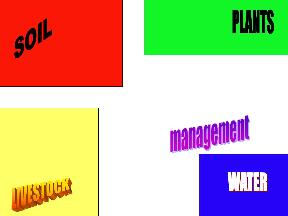
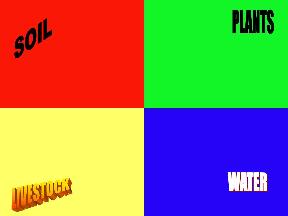
If we are growing grazing forages then in addition to management we may need to consider the livestock.  We have identified the basic pieces of a simple puzzle.  I borrowed this puzzle idea from Robert Shoemaker of Va. DCR.  He kindly offered me the use of his slides but after talking with him, I found it just as easy to create a few that were easily customizable.

The soil contributes basic properties of fertility and alkalinity or acidity, productivity, leachability, depth to bedrock, water holding capacity, cation exchange capacity, organic matter, particle size and topography.

The plant community must be adapted to the environment and sustainable in order to stabilize the soil and produce a useful energy product.  The plant interaction with the soil, its root penetration ability, Its water and nutrient uptake potential, its hardiness and its productivity are all factors.

Water and the water holding capacity of the soil and the depth to water table and annual rainfall will influence each particular plant species ability to survive in the given location.

Both of these factors influence what plants will survive on the soil.  If the plant that survives is a cactus or a red root pigweed then the livestock business is going to be tough going.  If it is a nice cool season grass mix with some palatable legumes, then things will be a little easier.

Similarly the livestock will have an impact on the soil and the plants.  Consider our previous discussion on the impact of too frequent grazing on young plants.  Different plants have different palatability’s and different animals prefer different plants.  Livestock also impact soil fertility through their grazing patterns and hoof actions and returns to the land and this distribution varies widely by species of livestock.

Then there is the wildcard.  Remember two of Mother Natures rules.

Nature abhors a vacuum.    Every action in nature will create a reaction.  You take something away and another thing will fill its space.

MANAGEMENT…..or lack of same…….this is the source of most problems.  Nature left to it’s own devices will find the proper balance of all the other factors.  Just as is the case in your and my jobs, unless you are self employed, that balance is usually not what is desired by MANAGEMENT.  Not all MANAGEMENT is evil.  Heck I have been a manager and even I am not totally evil.  But management will influence the natural factors.


Too much lime applied by MANAGEMENT will affect the pH of the soil which will in turn change the survivability of the plant species and this will effect the livestock and possibly the erosion potential of the land.  Eroding land will pollute the water.

MANAGEMENT with a goal of continuously stocking three cows per acre and maintaining Orchardgrass and clover better have a good plan B.  MANAGEMENT with a goal of stocking fifty head per acre on mixed grass pasture and moving the herd twice a day with 35 days rest between grazing might have a workable plan.

MANAGEMENT that tends to focus too much on one segment of production will invariably do so at the expense of the other segments.  In this example an over stock of livestock is at the expense of the plant, soil and water resources and MANAGEMENT is of reduced effectiveness.


In this example a reduction in water resources through a drought demands an increased level of MANAGEMENT to have any hope of salvaging anything like status quo in the other areas.  Typically in a water reduction situation all segments will be negatively affected but effective MANAGEMENT will minimize the negative impacts.

This is probably a more accurate depiction of how a drought situation would be graphically depicted.

This brings to mind some quotes I recently ran across from a noted grazier and cattle producer, Kit Pharo.

“As I travel around the country, I have found that many producers try to run enough cows to keep up with their highest grass production.   This forces them to feed hay when grass production decreases – often for several months.   The most profitable producers that I know of have a stocking rate that matches their lowest grass production.   For the most part, this eliminates the necessity of feeding hay.   To take care of their high-grass production periods, they utilize stocker animals – often of their own raising.”

Kit Pharo

“Although it has been well proven for over 20 years that we can dramatically increase grass production through Planned Rotational Grazing and/or Management Intensive Grazing and/or Mob Grazing, I suspect less than 5% of cow-calf producers practice any of these grass management concepts.   Why is that?”

Kit Pharo

Feeding hay is often the result of poor grass management and/or having too many cows.   Jim Gerrish says, “The average producer inMinnesota feeds hay for 130 days.   The average producer inMissouri feeds hay for 130 days – and the average producer inMississippi feeds hay for 130 days.”   What does this tell you?   Does it make sense?

Kit Pharo

“You MUST manage your land resources in such a way that you make the most efficient use of the FREE solar energy and rainfall that falls on it.   Planned Rotational Grazing and/or Management Intensive Grazing and/or Mob Grazing have been well proven to increase forage production (and beef production) by 50 to 200 percent – while improving the land.   WOW!   Believe it or not, the cost to do this is minimal.”

Kit Pharo

I believe all of the above to have a high degree of truth to it and these are all elements of MANAGEMENT.

Or as I heard one farmer say a long time ago.  “Heck man, I already know how to farm twice as good as I do now.  I just don’t have time to do it.”

But as my mother used to tell me, “If you have time to do it over, you have time to do it right.”

I would conclude by saying don’t let MANAGEMENT goals get in the way of proper management and environmental stewardship.  If it is good for the land and the environment, then it is good for you.

How does Your Grass Grow


Tate’s Tips
A Series of Reflections on growing grass for forage

Issue 2.
How does your grass grow?

I have been reminded to tell folks that this is a blog which is basically one mans opinions and that I have no qualifications whatsoever to give any advice. For real advice contact the Virginia Extension Service. They are the designated hitters.

In order to discuss forage management and culture we must have some fundamental understanding of grass.

While my agricultural career has been animal based, there would be no animals without the magic of plants. One thing that I have learned over the years is that all things are related and that you can not change one thing without having an impact somewhere else.

At risk of giving away one of my good routines with third graders when we are teaching about soils, I challenge them to give me the name of a food that they like to eat that does not come from the soil. We then go through a series of interactive questions tracing their food suggestions back to the soil. It is a simple and fun process where I get to see a lot of little light bulbs light up over some heads. A few blank looks as well but a lot of light bulbs, sometimes even from the adults with the kids. I usually end up by telling them that without soil we would not have anything to eat, no oxygen to breathe, and no wool or cotton or leather for clothes or shoes, no wood to build houses and no clean water to drink and that if we could survive we would be standing on a rock, naked and hungry and gasping for breath. I have had kids tell me eight years later that they remember that.

The point is that all things in the natural world are related. Like it or not we are a part of the natural world. What we do influences how we live.

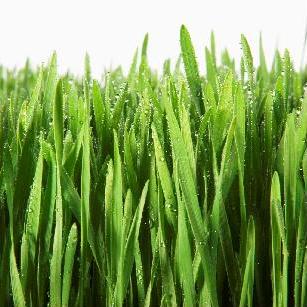
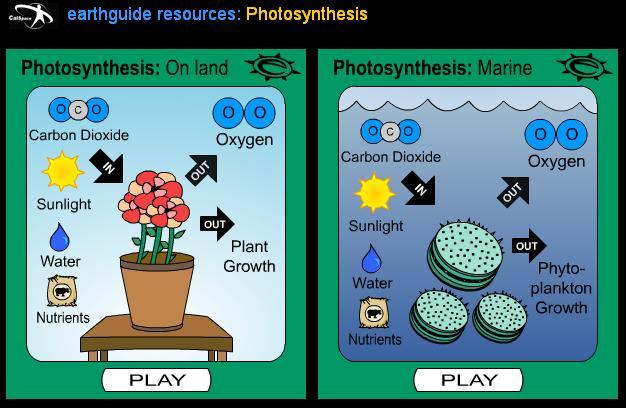
Grass is a fundamental part of that natural world. It is one of the miracles of the plant world. Plants perform the miracle of life every day. Plants take water and nutrients from the soil and through the miracle of photosynthesis, combine them with sunshine and create life and energy. That energy is stored in leaves and stems and roots.

Below is a graphical depiction of the process:

Just as described the roots take water and nutrients from the soil and carbon dioxide from the air and manufacture energy in the form of sugars and emits oxygen for the plant, giving us both energy and air.

The next illustration shows that the process occurs both on land and in the water with phyto-plankton being the basis of energy and life in the oceans. The smart third grade kids always think they have got me when they bring up a seafood item, but I am fortunately not nearly as dumb as I look.

For more detailed information on the processes above do some light reading on the Calvin Cycle which will take you through the chemical process of converting carbon into long chain sugars. That is more chemistry than I am capable of conveying.

The plant then uses the sugars for energy and for complex carbohydrate and protein building and in many cases conversion to lignin which gives the plant its structural component. The more complex the component that the plant builds then generally the less digestible the plant is and the more long term and woody the plant becomes. But photosynthesis is the engine that drives it all. Take away the sunlight…….Game over. Take away the water…..Game over. Take away the nutrients……..you guessed it, Game over.

Plants start from seed or in some cases from vegetative cuttings. At first they are energy users. Seeded plants rely on energy stored in the seed to produce a tap root and the first leaves. As the root begins to accumulate moisture and nutrients the leaves begin the photosynthesis process and the plant builds itself and begins to store energy. The stored energy is what we benefit from when we eat corn or rice or beans or any other type of seed crop. That is the energy that is to sustain the new plant.

The plant builds itself by adding leaves and stems and roots. Generally for every bit of plant that you can see above ground there is an equivalent amount of plant underground. Energy is stored in all parts of the plant but the main functions of the root are assimilation and transport of water and nutrients and the storage of energy. A beneficial side effect of the root function is to hold the plant securely in the earth.

Like all living things the plant is driven to go through its growth cycle and reproduce. After reproduction the plant is pretty content to go into a retirement mode and enjoy life. When and how plants reproduce influences their other characteristics.

Lets talk about grasses. Lets visualize spring in fast forward. The ground warms and the robins arrive and the spring rains and sunshine begin to refresh the face of the earth. The brown tones of winter take on a greenish hue and before we know it the hum of your neighbors 46 horsepower lawnmower arouses you from a sound sleep at 7:00 am on a Sunday Morning. As you arise you wonder why that fine gentleman who needs to arise so early to commune with nature and his maker can’t go to church instead of cutting his grass.

Those things aside let us examine the grass. As discussed above that grass plant wants to put roots deep into the ground and send leaves and stems upward to reproduce. It takes advantage of the warming temperatures and the lengthening daylight and produces at a prodigious rate. There are days in the spring when you can actually see corn grow. The grass is similar but harder to see.

Let us use a little analogy at this point. Think of the grass plant as a small business that produces chocolate chip cookies.

The small business would go to the bank or to their rich uncle and borrow start up capital to buy flower and chocolate chips and milk and sugar and eggs and an oven, packaging supplies marketing capital etc. ——- The plant gets its start up capital from the seed energy.

The first few batches of cookies are made and packaged and distributed. A few dollars came in and you are ready to buy supplies for the next batch and the friendly health inspector shows up and quarantines the kitchen because you need blah- blah- blah to meet the health code regulations. This takes all the income and also a little more which means another trip on bended knee to the bank or uncle.

The livestock equivalent is your horse, cow, goat, pig, llama, alpaca or other grazing animal coming along and grazing the plant prematurely. The plant reaches into the roots and pulls out whatever energy it has been able to store and attempts to regenerate its leaves.

A few weeks go by and the health code needs have been purchased and implemented and cookies are baking and the aroma is wonderful and draws in the business inspector who needs to verify that you have all the proper permits. Naturally to operate a cookie business you must have the appropriate local and state permits even the ones you never heard of and by the way you must have industrial electrical service and so the business is shut down again until you complete the upgrade. Again all income is disbursed in this transaction and the bank account is again depleted and you still have not paid the egg bill this month.

The animal equivalent is the plant being grazed off to ground level again before it has had time to bank any reserves.

Properly permitted and electrified you once again begin to bake and even launch a new flavor cookie created while the business was dormant. You go along for a while and are putting cookies in the distribution chain and folks love them and some income comes in and sales take off and you acquire a major grocery distributor who wants a thousand dozen a week. Sales are so good that you need a bigger truck to deliver cookies. Back into the bank account. A truck costs how much? And I need a CDL driver because it has air brakes and the insurance is what?

The animal equivalent is yet another grazing before the plant has banked any root reserves. But the plant struggles and puts forth a new stem or two and endeavors to survive. But it takes longer for the plant to push that stem and those first leaves up. Moisture is a little deeper in the ground than it was when it was planted and the roots have not yet made it that far down.

The cookie business resumes and the banker or the rich uncle who have been carrying you see a business with new improvements and new permits and a new contract for cookies and even a new truck. They are thrilled and begin to talk about a return on their investment.

One day there is a fire in the kitchen and you are shut down for another two weeks trying to get things rebuild and repaired and repermitted. No income and more bills.

The animal equivalent is another grazing of the forage portion of the plant.

Then some kid comes down with swine flu and his mother holds a press conference to declare that it must have come from those new cookies that little Johnnie loved so. She had learned that they were made using animal products. Sales cease. The big contract is cancelled. The health department swoops in and orders a recall of all the cookies and the kitchen is closed down until testing can prove that there is no contamination or danger to the children. You are forced to throw up your hands and take bankruptcy. All the assets of the business are put up for sale to satisfy the creditors. You have nothing, and try hard to get a job at the local bakery but your reputation is shot and no one will hire you.

The animal equivalent is the plant is grazed yet again before it establishes any root reserves and unable to draw up any resources it expires and its spot is taken by a pokeberry or hardy horse nettle or red root pigweed, which your grazing animal will not eat.

The take home message is that the key to maintaining a desirable stand of grass is that the plants must have time to rest and regenerate. Generally, after grazing or mowing, a plant takes about five days to begin to put up new shoots. The closer it is grazed the longer it takes. If it is stressed it take longer. If it is 95 degrees and dry it takes still longer. Under optimum condition a forage plant needs thirty five days to rebuild its productive forage base and its root storage. Under stress conditions the rest phase may need to be longer. If after five days dear pony (or other grazing creature) is standing there to clip off the tasty new shoot, the plant is in danger.

Grazing management is a key to maintaining a forage base.

Intro to Forage Production….a laymans guide


Tate’s Tips
A Series of Reflections on growing grass for forage

Issue 1.
An introduction

As a lifelong stockman who has worked in some phase of agriculture for all of my working life, and now celebrating ten years in working in conservation, grass and forage have always been an important aspect of my life. In the early years it was something I took for granted. In the middle years it was something to be nurtured and improved and like everyone else I sought miracle cures and magical species to solve our forage problems.

Here in recent years I have finally come to the realization that we actually know very little about grass around here. Spoiled by normally abundant rainfall, to the tune of 42 inches per year on average, we have culturally adapted to the mismanagement of our forage resources.

As I look down the barrel of the 22nd anniversary of my 39th birthday and as I walked through the pasture checking calving cows for new babies, I observed the grass in the pasture and I reflected on how much I had learned about grass in the last few years and how much I still did not know. This general reflection is normal at this stage of life and is broad in spectrum, but I will try to remain relevant to forage.

It occurred to me that so much of the conventional wisdom that I had accumulated in my life, particularly in the area of growing grass, was of significantly less value than the souvenirs the grazing cattle had left in their wake. I had an epiphany of sorts. I have always viewed myself as having a different paradigm, but did I really. My answer was no……but I needed a different one.

I have been raised for nearly all of my life in the area of post World War 2 national prosperity and production driven agriculture. Let me be abundantly clear here. The prosperity was national and general and not particularly agricultural. For decades the farm commodity prices have stayed low and farmers had to be more productive and get greater yields and farm more acres to manage to cover the costs and stay in business.

Our whole agricultural system has been geared toward greater productivity in every aspect my entire life. Cheap commercial fertilizer has facilitated this drive toward ever increasing production goals. Sustainability was only mentioned in macro terms of sustaining agriculture and seldom in sustaining anything at the cost of lower production.
For some this gave rise to the organic movement which in and of itself is a good thing, but in my view the practitioners have gotten caught up in a cycle of certification and marketing lingo and a competition of who is more organic than whom. The tight “organic” standards and certification criteria have given rise to the “all natural” category of products.

But I digress. My intention is to discuss principles of agronomic grass production and to address needed changes brought about by the economy and production needs. When the phone rings today and folks ask advice in improving a pasture, if I give the same answers I gave a couple of years ago, I need to be prepared to give audio CPR over the phone as the standard advice of a few years ago can be grab your chest and protect your wallet expensive today. What I hope to do here is to create a series of articles that we can post on line as a resource to use in thinking about forage production and livestock management. I don’t have much of a plan, but that is my nature. I am a seat of the pants kind of guy who has had so many plans kicked out from under him that I now prefer to go with the flow and using the old army lingo, improvise, adapt and overcome and survive.

Generally I want to discuss elements of production, species and varieties of plants and animals, natural factors, unnatural factors, livestock management, and production techniques.

The first and most important topic will be basic plant physiology. All of this work is intended to be in layman’s terms so that I can understand it. Occasionally I may site scientific work which has been interpreted for me by the scholars of forage in my life. I will also digress from scientific knowledge at times and give the unique perspective of the life experience of a beat up old cowboy, because my focus will be on sustainability rather than production and most research is production oriented.

It occurs to me that you may have asked yourself by now, “Exactly what qualifies this yahoo to even address the topic?”

The answer is nothing in particular. I am the son of the son of the son of a farmer. One of my earliest recollections was of riding the mule as my daddy cultivated the family garden plot. Who among you today has a garden plot of sufficient size to require a mule for cultivations? I also recall riding that mule once in a runaway after plowing up a bees nest. Well I rode him for a ways anyway before I hit the ground.

I was raised by a Strawberry Roan horse named Miss Lucy who instilled in me a love for large animals which led to living my life through agricultural pursuits.

I have a B.S in Animal Science from Virginia Tech.
I have been in the Registered Angus business in one way or another for over 34 years now.

While we have sold most of the herd, I still have few to keep me broke and honest.
A member and past president of the Va BCIA, member of the Culpeper BCIA Bull Test committee, life member of the American Angus Association, member of numerous horse organizations including the Virginia Horse Council.
I am an NRCS certified level I conservation planner.
I am a certified nutrient management planner and scheduled to take the course and test for the new turf grass and landscape certification as well.
Back in the day before round balers, I was the machine of choice for hay movement.
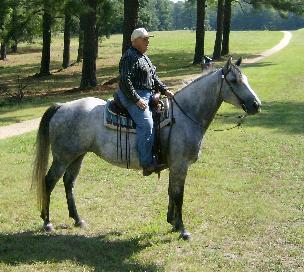
I currently lay unverified claim to owning the prettiest Gray PMU rescue in Hanover County

In general I am an old man with opinions, and I am not afraid to share ‘em.

The Rodeo at the Horse Show


The Rodeo at the Horse Show


Baby Jim
Photo courtesy of The Old Cowboy Archives

The Rodeo at the Horse Show.

When Baby Jim was a youngun and still eating vittles from his Mammy’s table, he had a few equine adventures.

Baby Jim’s Daddy had a good friend who had quite a few horses. In fact the man owned four different stallions of four different breeds and bred mares from all over the area. Now the mares this man owned were all Tennessee Walkers and that was his breed of choice. He had a beautiful big Walking Horse stallion and Baby Jim use to be the exercise boy for that horse. He was good enough that a trainer most often successfully showed him but Baby Jim rode him a lot to keep him in shape.

Baby Jim also started a lot of the walking horse colts and fillies and did the preliminary riding for the evaluation that determined if they were show horses, sale horses or potential breeding stock.

The owner also had a Shetland Pony Stallion who was used to drive to a cart and he was very pretty and well made and had a pretty good disposition for a pony stallion. He was sorrel with a flax mane and tail and was quite eye catching and popular.

There was an Appaloosa stallion that was white with the black spots and Baby Jim just never cared much for that horse. He was not very brainy and was often difficult to handle.

Then there was Lebo Judge. Lebo was a pretty little bay Quarter Horse. He was not very big but he was all horse and was a nice little stallion.

Every time the walking horse or the Shetland pony went to a show we would get several new bookings for them for mares from people who saw the stallions at the show. So going to horse shows became a small part of the marketing strategy for all of the stallions. Baby Jim and his dad usually took the Shetland or the App or Lebo. The trainer showed the Walking Horse.

We seldom took the Appaloosa as his trouble making nature did not seem to win him many friends and those who wanted his color genetics knew where he was.

We very often would take the Shetland or the Quarter horse and just kind of have em around to be seen. The quarter horse was so easy to handle that Baby Jim grew quite fond of him. He inquired if this horse had ever been ridden and no one knew. So Baby Jim decided to give him a try. It was quickly evident that if he had ever had a saddle on he had not worn it for long. So Baby Jim started to work with him. The horse was quite sensible and it was not very many days until Baby Jim was up and riding him in the practice ring. Another day or two and they were out riding around the farm.

Two things make Lebo memorable. The first was his speed. No one knew he could run. Baby Jim was out riding along a big hay meadow and let him out a little and noticed the horse was running effortlessly. Baby Jim made sure he had some brakes by stopping the horse without difficulty and then decided to see if he could run. They walked down to the far end of the field and then Baby Jim let him out. By gosh that horse could run………That was the fastest horse Baby Jim has ever been on. And when started from a standstill his power was going to pop your butt out of the saddle. He could run so fast that between the wind itself and the wind whipping the little stallions luxurious mane it was almost blinding and difficult to see without eyeware. He fit the old quarter horse description of “A sleepy little hoss that can unwind like lightning.”.

Baby Jim was letting him run one day when a bell hornet was flying in the opposite direction and hit Baby Jim square in the forehead. A bell hornet is the local term for a large hornet that is about an inch and a half long and brown and yellow in color. Their sting is ferocious but they are not terribly aggressive unless the nest is bothered. They fly very fast. The bell hornet was flying fast going south. Lebo Judge was flying fast going north and when the hornet hit Baby Jim, it did not sting him but did knock him off the back of the horse. Riderless, Lebo headed back to the barn at a high rate of speed, which is how the older generation regrettably, discovered he could run.

The other thing that makes Lebo stand out in memory was the rodeo ride. Baby Jim had not been riding him long when the owner decided that he needed to go to a local horse show to be seen. Mare bookings were evidently a little light. Baby Jim’s daddy was surprised to see Baby Jim toss his rig into the back of the truck but did not say anything. He did not know that Baby Jim had been riding the little stallion.

When they got there Baby Jim unloaded him and cleaned him up and walked him around a little to make sure the horse had brought his usual good disposition with him and to see what mares in heat needed to be avoided. The little stallion would not be any problem but sometimes those mares could cause problems on their own so Baby Jim had a policy of identifying and avoiding while at shows.

A little while later Baby Jim took the horse back to the truck and tacked him up and stepped up. Now the intent was not to show the horse but just to show him off and Baby Jim figured a good looking horse under saddle was a lot more impressive than one in a halter. Besides who wants to walk around all day at a horse show, leading a perfectly good horse. The old cowboy mantra was never walk anywhere that you can ride and you should be able to ride anywhere you go.

And Baby Jim was a good horseman and a good rider in those days and when he was mounted on a good horse it was one aspect of life that he was able to shine in and so the normally shy and plain kid was not above showing off a little bit while mounted. This tendency is what got him into trouble that day. Baby Jim rode the little stallion all over the show grounds. Thru traffic and kids and such and quietly worked on little training things and chatted with folks who noticed the little horse. He was feeling quite confident and had made several contacts about possible breedings. After all…..that was the purpose of being there. Even entered a couple of classes on the spur of the moment and Baby Jim was not a show cowboy.

It was a hot late spring Sunday and Baby Jim decided he could use a cold drink. He spied his dad along the ring watching the show and chatting with folks and he rode up to him. He said “ Hey Dad, hold this horse while I go get a soda.”. That is when the stoooopid kicked in and he tossed the reins to his paternal ancestor and went to step off. Not satisfied with one stoooopid move at a time, Mr. Hot stuff swung his right leg over the front rather than over the back. The little hoss tossed his head and Mr. Hot Stuff kicked him in the top of his neck with his boot heel.

The hoss put his head back down…….in fact he put it between his front feet and grunted and threw his butt toward the sun. And there it was. One stoooopid kid riding a green hoss with his right leg hooked around the saddle horn and no reins and the horse bucking for a fare ye well in the middle of the parking lot.

Funny how thoughts fire through the brain in times like that. Baby Jim recalls a series of thoughts. Damn, don’t fall off…..everybody is watching…….watch that car hoss…….If he runs into a car am I gonna have to pay for it……Old man will kill me……If this hoss throws me into a car he might kill me……for gods sake, Move lady…..hope no one else gets hurt…….your are still riding……get control of this hoss.

Baby Jim had quickly gotten his leg back in place from the horn but never found the stirrup. The little hoss was bucking hard but it was honest and rhythmic and actually pretty easy to ride. Then Baby Jim heard the Public address announcer calling the action in the parking lot and yelling Ride Em Cowboy. After a few near misses with automobiles Baby Jim finally managed to snag the left rein and pulled the little hosses head around and he lifted it. Baby Jim managed to lean down again and snag the right rein and had em both on the left but was back in control. Lebo quit bucking and dropped to a crow hoppy trot and they made a loop around the grounds and came back to where it all started and Baby Jim stopped him and dismounted like someone who had a brain. That was the only time that horse ever had a bad moment and it was not at all his fault. No one got hurt. No automobiles were damaged. The horse came through it without incident or injury and no lasting effects. Baby Jim rode and sat on him the rest of the afternoon to prove to prospective customers that the horse was all right and only the rider was insane.

Lebo’s speed was his undoing. Someone found out he could run and offered a good price for him. He went on the track and won a few races but as he moved up in class he began to get beat. Someone else bought him and he became a polo pony. When Baby Jim trundled off to an institution of attempted higher learning, he lost track of the fine little hoss but his love of quarter horses had been ignited.

Top of Form

The Hill Side Slide


The Hill Side Slide

1969 model Star Baby
Baby Jim
Photo courtesy of The Old Cowboy Archives
The Hill Side Slide
Once upon a time in our hero’s cowboy past he did a stint at a big farm in the mountains of western Virginia.
It was a beautiful place to work. The total farm was about five thousand acres and was in three tracts. Two of these were close to each other and the third was about twenty miles away. One tract was basically the side of a mountain in the Alleghenies. There, cattle were run and a little hay was made on the lower parts of the mountain and as the steepness increased toward the summit there was forest.
The main farm involved a couple of ridges that ran parallel to a river bottom and the headquarters was in the bottom along with a good bit of cropland. The ridges were in pasture where they were gentle enough to get a tractor and mower over now and again to prevent forest encroachment. The forest always reclaimed anything that could not be mowed and maintained.
This farm had a storied past in the Angus business and had a good herd of well bred cows. The farm manager who had presided over the glory years had retired and the next few managers lacked the ability to produce a vision for the operation and direct the owners toward it, so the farm was floundering in obscurity without direction. The ownership hands on management had also passed to another generation who was an absentee owner who was maintaining for the older generation. While he was a good fellow and highly successful in another field of endeavor, he lacked the passion for the farm that success required.
All of this is twenty – twenty hindsight that is crystal clear now. At that time our hero had a decent reputation in the Virginia Angus business and was looking for something bigger and better with a bit brighter future and he was lured to the operation as cattle manager and assistant farm manager, his mission was to rebuild the herd from the existing two hundred cows to four hundred cows and strive to achieve previous performance heights and reputation.
Knowing the quality of the base cowherd, he jumped at the chance. You know the old saying about fools rush in. This proved to be the yearlong experience that caused our hero to vow that he would never touch another cow unless he owned it.
While there were myriad issues that precluded achievement, it was a beautiful place to work and many pleasant days were passed on the farm. Many a morning was spent where the sun was greeted from atop a high ridge mounted on a good horse and watching the rising sun chase the darkness from the valley below to reveal the cows grazing in the luxuriant grass in the valley and on the hillsides.
Baby Jim favored using a horse to check pastures because the horse could generally go where the cows could go and the four-wheel drive pickups could not come close to doing that. On the steeper reaches even a tractor was not nearly so safe as a good horse. All the locals had stories of overturned tractors on the hillsides and there was a local hierarchy of hillside-qualified drivers and equipment.
This afternoon in March of 2010, which has been one of the wettest and snowiest winters locally on record and following the wettest fall in memory, our hero slipped in the mud on flat land and crashed into a corral panel, landing on a bad hip and an arthritic wrist. Rising from the mud, our hero declared enough of this stuff and trudged back to the house to watch a John Wayne movie. As he limped along he remembered another big slip.
It was the spring of 1980….. A little later in the year than now. The grass was just starting to green up good. There was a good sized bunch of Spring calving cows that were being AI bred. That was in the days before widespread adoption of breeding synchrony. It was our hero’s habit to observe cows often and to gather and sort the breeders each morning.
It was a rainy spell and had been showering off and on for a few days. That morning it was raining steadily as Baby Jim guided his leggy Bay mare up to the ridgetop in search of the herd. Naturally that morning in the rain they were scattered on the side of the second ridge over and were as far from the corrals as possible. Some were lying in the woods higher up and some were scattered across the hillside grazing. Baby Jim pointed the mare at the far wood line and she picked up a meandering trail that zig zagged up the hillside to the forest.
Arriving in the forest and getting above the cows, they halted to allow the mare to blow from the climb and to let Baby Jim have a few minutes to observe the cows. After a few minutes they began to stir the cows and haze them toward the corrals. Now it should be noted here that on most days, the top item on the “To Do List” of any given cow is usually not “Go to the Corral” . In fact most often the opposite is true. Baby Jim would usually try to counter that bovine tendency with some hay or silage or other cow goody in the corral but when grass is growing some cows just don’t seem to want to play by the game plan. It pretty quick became clear that today was going to be one of those days. The whole bunch resisted moving and gathering. But this was not our hero’s first gather and the big bay mare was learning her craft well and soon they had the cows bunched and moving down the far ridge and thru the valley and up the second ridge.
The only thing to worry about was that the cows didn’t top the ridge and break off to the right as the corrals were in the left corner. But that left hand side was the least steep route off of the ridge. There was a daily balancing act of motivating the stragglers and still getting to the ridge top before the leaders saw an opportunity to divert. The stragglers were particularly troublesome that day but our horse and rider topped the ridge in time to convince the leaders to continue in the desired direction.
But then the stragglers stalled again. Both horse and rider could see one particular cow that was thinking. They had to scramble back down the ridge to motivate the stragglers and then hurry back to the ridge to maintain the direction of the group. When they got to the stragglers they gave them a hard push to get them to catch the main body of the herd. The cows knew where they were supposed to go but some days they just didn’t wanna.
As they regained the ridge with the stragglers moving at a good pace it was relieving to see the leaders heading in the right direction toward the corrals. To get to this vantage point Baby Jim had passed a few of the stragglers and suddenly one cow broke back and to the right. She attempted to go behind the horse and rider and back to the woods. But having already gained the ridge top the horse was easily able to cut the cow off and redirect her toward the herd.
Now this ridge was not big enough to be called a mountain. But it was sure bigger than a hill. On the front side there was probably four hundred feet of elevation and on the back side maybe three hundred feet with slopes up to about thirty or forty percent. Dotted across the faces of the ridge were some little coves, which were basically pockmarks that were too steep or too rough to mow and they generally grew up in scrub trees.
This cotton picking cow took aim at one of those coves and took off at a gallop. Baby Jim considered letting her go but was uncertain if she was one of the cows needed, and besides that, if she learned that she could get away with such behavior it would happen every day. So they headed into the cove after her but not at a gallop because it was steep. About the time the mare got to the steepest point the cow burst out the far side of the scrub trees and hightailed it for the herd. Job well done as the leaders were near the corrals now.
About that time the bay mare lost traction. One foot slipped and then another and then all four. Baby Jim let her have her head and she tried valiantly to climb but she could not get a foot to stick to anything. There was a thin veneer of soil in that spot and underneath that soil was a solid sheet of bedrock. With the wet conditions the soaked veneer of soil was simply peeling off of the rock. Unable to go up hill the mare turned to go across the hill but the footing was no better and she nearly fell twice and Baby Jim guided her to face down hill.
The mare was alternately sliding and bracing and scrambling and steadily going down hill. Baby Jim feared that if he tried to step off that he would throw her down the hill. He also did not think he could stand and did not want to end up under her scrambling feet. RIDE AND PRAY. It was only seconds but it seemed like an eternity. Things were starting to look grim and suddenly a foot stopped sliding. Then another and the mare nimbly got stopped. Baby Jim eased out of the saddle and managed to keep himself upright. He looked up and saw that they had slid nearly a third of the way down the slope from the little cove, probably 70 or 80 feet . The mare was stopped and trembling all over but she was still slipping. No foot would hold traction on the steep wet rock for long. They stood for a moment and tried to find a way out of this jam. Baby Jim studied the landscape and tried to calm the mare. She trusted him and followed his guidance. There was a spot about twenty feet to the right that, if they could get to it, the slope eased and they could possibly get out of this mess. But it was still raining and that twenty feet was still steep and uphill in two directions and there was still a good chance of having a very bad day.
Baby Jim tried to get the mare to stand while he tried it but when he ventured forward she turned and tried to follow and she slipped. Baby Jim was ahead of her and he pulled on the reins as hard as he could and he slipped as well but gave her enough purchase to get a foot on something and she scrambled out after him and together they scrambled and clawed their way up to the somewhat flatter spot and stood there for five minutes counting their blessings.
They walked back to the ridge top and Baby Jim remounted and followed the last of the stragglers down the hill to the corral and set about the days work.
They had left a gouge in the hillside that was clearly visible from the road and it was only with great determination that Baby Jim stayed his hand later in the day when someone critically complained about what fool had caused the big gall on the side of the hill.

The Legend of Baby Jim


The Legend of Baby Jim


Baby Jim
Photo courtesy of The Old Cowboy Archives

The Legend of
Baby Jim

Chapter 1. Getting Started

Baby Jim was not really born nigh on to full-grown. But he was a mite large and just a little peculiar around the edges. On the day he was born, his Daddy picked him up and set him on the ground. Struck by this odd behavior, a neighbor inquired as to what he was doing. Baby Jim’s Daddy replied, “ With ears like that I want to see if he will run like a rabbit or kick like a jackass.” Never one to take kindly to offense, Baby Jim started life off right by biting the old man on the leg. No, Baby Jim was not born with a full set of teeth, but he did have a few to use for self-defense and tending to his vittles.

The boy had a special fondness for his vittles from day one. He was born hungry and has been hungry ever since. In the early years the situation didn’t pose too great a problem. All you had to do was feed him eight or ten times a day and everything was okay. He wasn’t too fussy and would eat most anything you needed to get rid of. He never did take a shine to beets or brussle sprouts though, and could heave them suckers clear across the room with a great show of choking and gagging and frothing at the mouth. His Mother tried hard to get him to eat them, but Baby Jim would not be fooled. No disguise could hide the abominable taste of those two commodities and they just wouldn’t go down his neck.

As time passed by, Baby Jim continued his fondness for the culinary delights of most anyone who would cook for him. Regular feeding became an eighteen hour a day event. Being smarter than the average yard ape, Baby Jim knew that he must be well rested to properly digest his food and has always required six hours of sleep. A fellow just couldn’t eat right when he was tuckered out.

This trend continued until the appetite of Baby Jim exceeded the capacity of the family income. Finally one day when Baby Jim was five or six years old his Daddy declared “ If that boy is going to eat like a man, it is time he commenced to work like a man. Dadgum it boy, get to the field and lets commence to plowing. “ That was the fateful day that Baby Jim discovered that his Daddy had decided to raise him because he couldn’t afford a mule. Course, with Baby Jim’s penchant for groceries it didn’t look like a mule was in the near future either.

Now everyone knew from early on that Baby Jim would probably never crowd in on the territory of that Einstein feller. But our hero was not the dumbest sheep in the flock either. In fact folks often commented that he looked like he had a little bit of goat in him. Baby Jim would just flash his patented smile and take it as a compliment as he knew the goat to be one of the smarter animals in the barn. But, like his Daddy, he always had that hankering for a mule. Baby Jim’s Daddy wanted a little more help, but Baby Jim just wanted the companionship. After all, he felt that he had a lot in common with a good mule.

Baby Jim took to the work that his Daddy put him to. Folks allowed that while he didn’t really look like it, that he must be some kin to his family. He seemed to have the same way with the animals that his Daddy was know for. His mother had higher expectations. She expected Baby Jim to do his lessons and keep up his school work and make something of his self. His mother was thinking things like Doctor and Lawyer and Engineer for her handsome little darling (aw come on, you know how mothers are). His Daddy expected him to do his chores and tend to the stock and keep his self out of trouble ( a troublesome kid generally ain’t no help at all.)

Pretty soon after he started school Baby Jim figured out that he probably didn’t have much of a future in Hollywood. Why the first time he saw hisself in a mirror he even scairt hisself a little bit. But even this early in Baby Jim’s life his pragmatic nature asserted itself. He knew he couldn’t make himself into one of the pretty children. He just had to take what he had and do the best he could. And by golly what he could do as well as anybody breathing was be a cowboy. Now every six year old that ever was has fancied the idea of being a cowboy once or twice. But for Baby Jim it wasn’t an idea it was a mission. At a tender age, Baby Jim had already run into a few roadblocks and brick walls. When he discovered that there were things he could do better than any kid and better than most old folks, he figured “Maybe, this is what I should do”. And lets all face it folks, Baby Jim as endearing as he might be, had a face made for being alone on the range. This was one of the characteristics, which lent itself to him being widely referred to as “A Natural”.

Now in case you didn’t know it being a cowboy ain’t all about hugging your horse and riding off into the sunset. We are talking bout the real deal here not the drug store variety. A cowboy generally is not considered to be a good cowboy until he is so stove up that he generally can’t move without creaking. Consider this, Lane Frost was generally proclaimed to be the best bull rider that ever lived. This happened about the same time that he was killed in the arena by – – – – – – – ———- you guessed it a bull that didn’t think he was so hot. Most times a cowboy just can’t get no respect.


Bad Day for Bourbon


Bad Day for Bourbon


Baby Jim
Photo courtesy of The Old Cowboy Archives

Bad Day for Bourbon

We have mentioned in passing some of the horses Baby Jim has had the pleasure of knowing in his younger days.

One of those horses was a big sorrel appendix gelding named Bourbon. He was a big rascal, well over 16 hands and 1400 lbs. He was speedy and smart and sound as a dollar and a good riding horse. In the three years Baby Jim spent with Bourbon, he never knew the big horse to not show up for work and give it all he had.

Bourbon did have one little idiosyncrasy that is worthy of note. He had learned somewhere in his past that he did not have to stay tied. He was big enough to make it true. He had learned that if he put his weight into a good pull backwards something was going to pop and he could go graze. He just sort of felt like he was wasting his time standing around tied to a corral or post.

He pretty quickly tore up two or three bridles and a couple of halters. He was stout enough that he could lay back on a heavy nylon halter and pull and shake a couple of times and something was going to pop. Either the buckle or the snap or the rope or the post he was tied to. He was big enough to know he could break something. Our hero suspected that he did it for entertainment. Sort of like a big strong redneck kid saying “Hey yall, watch this!”

Our hero had a fix for him though. He made up a neck rope out of 5/8-inch diameter polyethylene rope with a heavy duty snap and two steel “O” rings. Then to tie the horse he would put the neck rope around his neck and run the shank through the halter to keep the alignment. This configuration took the stress off the hardware and put it onto the horse. As a finishing touch he tied up an automobile tire inner tube to a really stout place and tied old Bourbon off to the inner tube to let him bust that.

Well Bourbon gave it a try. He gave it a real good try. Baby Jim feared for a few moments that he might actually bust it. He flailed and he jumped and he pulled and finally he eased up and stepped up and looked at Baby Jim with a quizzical look that all but said, “How did you do that?”. It became standard practice for a while to carry the inner tube and the neck rope on the saddle when riding Bourbon, cause you never knew when you might have to dismount to attend to something and have to tie him up. After a few months he was making good progress and standing tied fairly well and the inner tube could be left behind and Bourbon would stand tied with just the neck rope.

Baby Jim was feeling real cocky about the improvement. All this is a bit of background for an event, which happened probably a couple of years later.

Now this farm had a cow that Baby Jim will remember to his last days. She was a big cow. She was a beautiful cow. She had raised show winning progeny. She was a valuable cow. She had a couple of little idiosyncrancies of her own. For one thing she was in heat every three weeks year round, even when she was pregnant. We do not know how many times the vet pregnancy examined her and she was a good breeder but she had regular heat cycles just the same. Boss would see her being ridden and tell Baby Jim that there was a cow in heat in the bred cow pasture and Baby Jim would go check it out, and it would be her. We put her on the preg check list every time the vet came and finally Baby Jim just left her out of the bred cow pasture until breeding season was over. By and by the boss came to accept that she was a little unique and quit telling Baby Jim that he had messed up again.

The other thing about this little 1600 lb maiden is that when she had a calf, she had the sweet disposition of a tiger with a toothache. Usually only lasted a couple of days but during that first day or two she was tough. Baby Jim and Bourbon learned this the hard way during Baby Jim’s second calving season on this farm.

It was early spring and a group of cows were calving on a hillside pasture just above the house where Baby Jim lived. This was a pretty step hillside of about twenty-five or thirty acres and it had a couple of big hedgerows that served well as wind breaks for the cows and the new calves. The field also had some contour strips that ran around the hillside to prevent erosion. While it was accessible by truck, when it was damp it was steep enough that the truck would tear up the pasture so Baby Jim made as many cattle checking trips through the field as possible on horseback rather than driving.

Checking meant that the hedgerows had to be checked and all the corners and little dales where a cow might hide to calve. One spring morning just after daylight Our Hero was checking this pasture and he came around one end of the hedgerow and started up the hill checking the other side. Two contour ditches up and about fifty feet out from the hedgerow was the above mentioned cow standing placidly and chewing her cud. She looked normal and Baby Jim did not pay her much attention. He figured to ride behind her as he went up the hill and was intent on looking into the hedgerow for any calves that might be scoured or distressed in any way.

Just before the horse and rider got to that second contour furrow the cow so placid a moment ago bawled like she was being attacked and charged into Bourbon hitting him square in the shoulder and horse and rider went down in a heap. Unfortunately Baby Jim was thrown clear. This was indeed unfortunate because Bourbon quickly leapt to his feet and abandoned the area at full speed.

This left Baby Jim on his hands and knees in the field with no means of protection when he spied a black spot lying in the contour furrow. This old gal had calved and was in maternal protection mode. Baby Jim looked around and spied a rock about the size of an orange and a small stick about two feet long. He crawled backwards and picked em both up just as the cow charged again. He hurled the rock with all his might and fortune was with him as he managed to catch her right in the middle of the forehead and stunned her a bit. He ran at her with the stick screaming and kicking and managed to buffalo her away from him.

He saw that the calf had raised it’s head and then tried to hide from the commotion in the safety of the furrow. Since all was okay he decide to let the pair alone and would tend to the calf when they made the truck run through the field. He then walked a circle around the cow and went down to the barn where Bourbon was pacing back and forth in front of the gate wanting to go back to the safety of his stall.

Baby Jim checked out the big horse and he appeared to be unhurt but well rattled. Baby Jim gathered the reins and stepped back up to finish checking the field. This was more difficult than expected because Bourbon wanted nothing more to do with cows. He would not go near one and any cow that raised her head to look at him was cause for an about face and hasty retreat.

This generally is not a good attitude for a cow horse to have and it took a lot miles and hours over the summer to restore Bourbons confidence that he could drive cows. It took nearly a year to get him to handle a charging cow again.

Time passed and another year rolled around. Bourbon had made great progress in the tying department and we routinely used the neck rope and he would stand quietly almost anywhere with it. He had made great progress in regaining his confidence and was once again the mainstay of the cavvy.

Another spring day and it was time for a gather and to do a vet check on a good size group of cows. Baby Jim and Delmonte went into the rougher end of the field to move the herd out of the woods and over the rough country and Curly and a couple of other boys checked the other end of the field with the truck. As they brought the main body of the herd up to the gate into the catch pen, Baby Jim saw Curly and the other boys pushing a calf and trying to back down a cow walking backwards and on the prod. Baby Jim immediately recognized the same old proddy cow with another new calf. Delmonte was mounted on Bourbon and our hero cautioned him not to go near the cow on that horse. Did not want to set back a years worth of work. Baby Jim yelled at Curly to watch her, but there were three guys and they had her under control and one of them was driving the truck so they had a place to escape to if necessary, and Curly was a good hand.

One of the farm crew happened to be on hand for some reason. This fellow was a mechanic and machinery operator in the cropping crew. He was also a fellow who had some swagger and macho to him. He made a comment about Curly having a hard time with the cow and Baby Jim looked at him as said “Well that cow will just gitcha and curly is doing alright with her.” Baby Jim and Delmonte took the horses into the barn and tied em up in the usual place and about that time the boss rolled up and the vet was right behind him. Baby Jim went out to report on progress and to get the plan of work from the boss.

Suddenly from in the barn there came a commotion and yelling and Baby Jim sprinted in to see what was up. Don’t know how it started but Macho Man was running through the barn with his hand on the cows head and about every third step she encouraged him along with a butt square in the fanny. We must confess that he was amazingly nimble and agile to keep his feet and stay ahead of her. But as they made a pass through the barn, it was just too much for Bourbon to bear. His old nemesis on the prod again scared him and he reverted to his old self and gave a good tug on the tie rope.

There was a creaking sound and Baby Jim feared for a moment that the barn would come down But the twelve foot section of two by six lumber that Bourbon was tied to came loose and he bolted from the barn with it waving in the air like a balloon on a string. Right behind them Macho Man and the cow went out the door with him still just a half step ahead of her with his hand on her poll.

Took ten minutes to catch Bourbon and he had to start tying training with the tube all over again.

Boss wanted to know if all this excitement was really necessary. Baby Jim at that time had yet to learn that discretion was the better part of valor……..a lesson still not absolutely learned by our hero…….and he quipped back, “No it ain’t absolutely necessary, but it sure does make the days more interesting, don’t it?”


Monte’s No Sale


Monte’s No Sale


Baby Jim
Photo courtesy of The Old Cowboy Archives

Monte’s No Sale

We have mentioned a time or two that Australian Shepherd dogs have possessed us for over a quarter of a century. After the first one there was no turning back. We find them to be smart, strong, intelligent, obedient, loving, protective, alert, devoted, willing, laid back and they live to please their humans.

In our early days with the dogs we had a couple that were protective to the point of being perhaps a bit aggressive. They were Marie’s guardians and we called them the Gator Girls. They chose Marie as their person and they both went with her wherever she went on the property. They would even accompany her from room to room in the house.

They were tough enough that we had beware of the dog signs up and down the driveway and Marie was sure to tell anyone who came to the farm to stay in your car, cause if the Gator Girls can’t bite you they will bite your tires……and it was pretty much true. We had to put them into their room any time we had company or they would sneak up and take a little nip just to prove they could.

Those two were the toughest we ever had and frankly we miss them a good bit because Marie always felt safe with the girls, even if she was alone on the farm for days at a time.

At that same time we had our big Aussie who was named Monte. He was the first and he was the one who set a high standard for Aussies around here and he actually trained a lot of the others as to their expected role and boundaries of the farm. Monte even knew the animals and knew the livestock that belonged and the indigenous wildlife that needed to be kept at bay.

Monte would not allow a strange dog on the place. But, when we got the second Aussie, Tana, and introduced her to him, he immediately adopted her as his own and she became one to be protected. Tana was the first of the Gator Girls and as she grew older she became the ultimate protector.

Unlike the Gator Girls, Monte was very tolerant of people. He loved everybody. He was exposed to a lot of people from the time he was a puppy and was never mistreated and greeted everyone with a smile. His greeting was to cock his head and curl his lip as he trotted up to folks to be petted. He was a good-sized dog as well and tipped the scale at a hundred pounds in his prime. Folks coming down the drive and seeing the bad dog signs and then stopping in the yard to see Monte walking up to them with his smile were often frantic in rolling up windows and locking their doors.

We were content to let folks think that Monte was the bad dog. Only our close friends ever saw the real bad ones that were in the house.

A fox, coon, possum or even a skunk that ventured into Monte’s realm did so at its own peril. Over the years he even developed a hard learned technique for killing skunks without getting sprayed. We have some skunk stories.

Beside our driveway and near where we park out vehicles is a large old Cedar tree. Many of our dogs have loved to lie in the shade under the Cedar where they could watch the front door of the house and also watch down the driveway toward the barns and the road.

Monte would be there every afternoon when we returned from our labors in town and he would trot down the driveway to greet us smiling and wagging all over. Aussies don’t have tails so they make up for it when they are happy by prancing and wagging their whole body.

One evening as we came home, Monte did not come to greet us. He was under the cedar tree but he was sitting there looking up into the tree. He turned his head and snapped a greeting but immediately went back to intently staring up into the tree. Curiosity made us go to the tree to see what he was staring at so intently and as we approached he became quite animated. About ten feet up in the tree perched on a limb was a ground hog and the tree was quite scratched up from efforts by Monte to get up into the tree himself. He had finally decided to wait him out.

Baby Jim tossed a stick at the ground hog, who then determined that he must make a break for it. Big Mistake. The ground hog jumped from the limb and Monte caught him in midair and the ground hog was dead before he hit the ground.

Monte used to keep the place free of ground hogs. And then after him little Loreal, who was a sweet little dog and a natural wonder of a cow dog. But one day a ground hog bit her, and from that day on she hated them with a passion. Since we lost Loreal a few years ago Baby Jim has had to go back to shooting ground hogs to keep them in check.

There was one time that Monte did go on the prod after a person. I firmly believe that left to his own devices Monte would have killed this man just a quickly as he would have a pesky ground hog.

It was Spring time. It was a Sunday evening right on the edge of dark. We need to point out here that Monte was Baby Jim’s dog. Just like the Gator Girls followed Marie, Monte was going to be somewhere near Baby Jim.
Baby Jim was in the process of doing the evening chores and making sure that all the water troughs were full. Our hero and Monte were in the field behind the house. A gentleman had come down the driveway to inquire about a bull. He came unannounced, at dark, on a Sunday evening to look at black bulls. Engrossed in whatever they were doing neither Baby Jim nor Monte had heard the car drive in and the man had knocked on the front door.

Marie greeted the man and was trying to keep the two Gator Girls from escaping the house and consuming him and he explained why he was there. Apparently the Gator Girls had unnerved him somewhat and Marie stepped out onto the porch, and closed the door, thank heavens. She explained to the man that she knew Baby Jim was somewhere about and she yelled for him.

Baby Jim and Monte both heard her and Baby Jim yelled back and Monte took off for the house. A few moments later as he walked toward the house Baby Jim heard an awful commotion. There was yelling and screaming and the sounds of a dog fight, with growling and snarling and barking. Baby Jim ran for the house and could clearly hear Marie frantically calling his name. He yelled and ran and dove through the fence and rolled to his feet and ran the rest of the way. As he rounded the corner breathless, He found Marie on the porch on her knees with both arms locked around Monte’s neck in a death grip as Monte dragged her across the porch snarling and snapping . He wondered to himself “What the H……” and then he spied the man hanging by his toes and his fingers on the outside of a porch column as Marie tried to restrain Monte.

The Gator Girls were in the house and raising cane because their mistress seemed to be in distress. They were clawing savagely at the door and barking and chewing on the door and rattling it on it’s hinges as they tried to pull it open. Another couple of minutes and they would have chewed their way out.

Bay Jim could see that the man was clearly shell shocked and was no real threat. He grabbed Monte by the collar and calmed him and helped Marie to her feet. He told Marie to go into the house and calm her dogs and he put Monte in the house as well.

Monte calmed quickly and as soon as the Gator Girls got their mistress back they calmed to a manageable level. Occasional Gator growls could still be heard from the windows as they monitored the situation.

The man was so shell shocked that he could barley speak his name or say why he was there. Baby Jim spoke with him for a few minutes a finally figured out that the man was in the market for a bull. Baby Jim told the man what was available and explained that the bulls were out in the pasture and would be difficult for the man to evaluate in the dark. The unnerved man agreed and determined that he would come back during the day next weekend and that he would be sure to call ahead.

As the man left, Baby Jim went into the house for a better report. Marie says she was standing on the porch talking to the man when Monte bounded around the corner. Monte was surprised to see a strange vehicle and then a strange man standing near his mistress. He stopped short and barked at the situation with his hackles raised. That is when things took a turn for the worse. Marie reported that the man totally lost his composure and yelled “Oh God! Lady, don’t let that dog bite me!”

He then did the absolutely dumbest thing any human being could possible do in such a situation. He jumped behind Marie and grabbed her by the shoulders to use her as a shield from the dog.

Now Aussies are a thinking breed of dog. They think about things and then make a decision and they take the action they think is appropriate. It comes from being a herding type dog. They know what the objective is and they learn to make decisions to accomplish the objective. Little Loreal was born knowing more about working cows than Baby Jim does today after a lifetime of the work. Occasionally he would give her a dumb command and she would just shake her head and do what needed to be done.

When Monte stopped and barked, he was evaluating. But when the stranger attacked his mistress he took decisive action. He was going to protect his home and his family.

The only thing that saved the day was Marie’s decision to grab Monte about the neck and try to hold him. She said the man was dancing around her and trying to avoid Monte and still holding her shoulders. She knew that sooner or later Monte was going to have him by the leg and pull him down, so she did the only thing she could think of which was to grab Monte.

Suddenly without his human shield, the man bolted to the side of the porch and used the porch column to shield himself, which is where he was when Baby Jim arrived.

The guy did come back, but he didn’t buy a bull. He was as nervous as a long tailed cat in a room full of rocking chairs the whole time he was here. He looked at the bulls and seemed to like em, and quibbled a little about the price.

Secretly Baby Jim expected that the guy thought that if the bulls were as tough as the dogs, that he would not live through the week. Little did he know that most of our bulls are pets. We currently have a bull calf, Ulysses, that is not weaned yet but still wants his afternoon butt scratching every afternoon.

The Aussies we have today are not near as tough as those old dogs. Rose will sit in the lap of anyone who will pet her. Toby will make a little noise but he is not big enough to scare a tomcat off the porch. Marie is not near as tough now as she was back then either. Or maybe she is tougher. Today if someone did something that stupid, she would probably just let the dog eat em. Baby Jim surely would.

You Can’t Ride That Hoss !!!


You can’t ride that Hoss !

Baby Jim
Photo courtesy of The Old Cowboy Archives
”You can’t ride that horse!!”
In his advanced years our hero is a doddering old fat man who is troubled with arthritis and sinus problems and resulting balance problems. In recent times he has been known to fall on his nose while bending over to pull on his boots.
Some days are better than others but to say that riding ability is diminished is a slight understatement.
Back in the day Baby Jim was a rider. A good bit of college was financed by making good horses out of other peoples problems. Now our hero was never an outright bronc rider or rodeo cowboy and he was subject to being rudely deposited upon the ground more than once in his adventures; and it is some of those adventures that no doubt contribute to the particular achy spots enjoyed in doterage.
Even at a tender age, Baby Jim’s own father took particular joy in saying “My boy can ride that Hoss!” Then it was up to our hero to live up to it. Most of these horses were not bad horses but simply spoiled horses that had developed a behavior problem that they were successful in getting away with, and that sometimes took a good seat, a strong will, a strong hand and a little bit of horse savvy to correct.
Over the years we did run into a couple of evil horse and perhaps we will relate those tales at another time. But most of the time it was just unknowing riders and spoiled horses. Sometimes the owners were so perplexed that they could not adequately convey what the bad behavior was. As an example our hero was once presented with a horse that was supposed to be barn sour. He saddled up and climbed aboard and had very little difficulty in riding away. The horse did try to balk and turn back but it was easily directed and Baby Jim was in the midst of wondering what the problem was and had ridden about a half mile away when the problem manifest itself.
This loony mare was not barn sour………….She was a cotton-picking run away. She was an intelligent runaway too. She had learned over the years a lot of methods of relieving herself of her unwanted burdens.
The bridle was of no use. If our hero pulled her head around she just continued to run blind. The braking system had obviously either never been installed or it had failed years ago. This crazy mare had little regard for her own safety and when brushing trees failed to accomplish her goal, she would run into them. Our hero spent time standing in one stirrup off of alternate sides of the horse to avoid mashing and one time she went thru a tight spot and he had to throw both legs up over her croup and ride thru it laid out on her back.
The final obstacle was one she obviously had used before because when she broke out of the wooded patch she made a beeline for a clothesline. Baby Jim saw it coming and tried the brakes and tried the steering again and neither one responded in the slightest. She knew where she was going and what she wanted to happen. So our hero simply laid off to one side with his arm across the seat and hoped that she would clear it and if so he would too. The saddle horn clipped one wire of the clothesline and it almost threw the off balance pair before it popped. But that was the last obstacle and she roared up to the barn and did a sliding stop that any reiner would have been proud of.
By now she had peeved our hero a bit, and he put boot to her and reins across her butt and decided that we needed to run some more. They galloped a couple of more miles this time down a dirt road and gradually the steering came back and eventually the brakes did as well. Once control was restored they quietly walked back to the barn with several reversals of course along the way.
Baby Jim had about ten years of that type of experience under his belt before he took his first cattle job out of college. We should point out here that Baby Jim had some obstacles along the way and managed to cram a four-year course of instruction into eight short years so he graduated a bit older than the typical student. His first job out of college was at a big cow outfit where he was the herdsman for the cowherd. Breeding, calving, fencing, feeding, general cow care and accurate cow records were the primary charge. Our hero took a couple of his personal horses with him and there were three horses at the barn at his residence that were farm horses available for use.
Baby Jim had been told that the previous herdsman had used his own horses, so the farm horses had not been used much. When our hero inquired of some of the guys he worked with about the farm horses, he got some funny looks and not much information. Once he got settled in there came a pretty spring Sunday afternoon and our hero decide it was time to try these broncs. The first was a big appendix bred sorrel QH gelding who was probably better than sixteen hands and who weighed better than 14oo lbs. He was fast and we later learned that a few folk had fallen off of him and so he was tagged as a runaway. But he could just run faster than some of them could ride. With a little work he became the horse that Baby Jim could put most any of his help on to ride. His name was Bourbon and he became the mainstay of the string. When we were doing horse work it was a rare day when Bourbon did not go out.
Bourbon’s mother was next. She was alleged to be prone to rearing in her past but had not been ridden in years. She was a sorrel mare but not quite a big as Bourbon. She was not real old but she had some lameness issues and was not useful beyond a walk. She could walk all day and was useful for evening heat checking but she was not handy enough to use for gathers and drives.
The third was a beautiful bulldog type bay mare. She was a bit over 15 hands and stout and you did not have to be around her long to see she had some spirit. She was the third horse Baby Jim rode that afternoon and she was just a prancy high stepping lifey mare who had a lot of energy. But she had a pretty good handle and a smooth ride and Baby Jim enjoyed riding her very much. She had a little foolishness about her and she had a hard time standing still but our hero attributed this to lack of use. These horses had not been used at all in three or four years.
Over the next couple of weeks Baby Jim used his own gelding and Bourbon for routine field checking. Bourbon came around very nicely and got to be a real solid mount. Baby Jim was basically using the Bay mare that he named Spicy to do evening checking and work when he was alone so basically no one even knew he was riding her. Apparently she had a bad reputation.
There came a day when the boss decided that he wanted to move a good sized herd of cows to another part of the farm. These were cows that had calved and they needed to go to larger non-adjoining pasture. Since it was a large group of cows with small baby calves, it was decided that the best way was to drive them down the road. Since they were going down the road it was decided that all hands on the farm were needed to keep the cows out of the few neighbors yards. The boss laid out the plan and made work assignments and then asked Baby Jim if he thought it would be of any benefit and if he would be comfortable to be mounted in case a cow ventured somewhere a vehicle could not go. Baby Jim offered that he thought if he were mounted, he could be useful in the gather and should lead the parade to keep the cows directed and in check.
The appointed day came and Baby Jim went out early mounted on Spicy. He gathered the herd to be moved and had them in part of the pasture near the gate and was riding around them keeping them bunched while waiting for the rest of the crew.
The first guy to arrive sees Baby Jim riding Spicy and says “You can’t ride that hoss!”. Baby Jim became concerned as the owner’s family had some personal horses and he feared that he was confused and was riding one of those horses. So he replied that he had been told that this was a “farm horse”. The response was “It is, but you can’t ride that Hoss!”
When the next guy arrived the same conversation ensued. This was repeated with several arrivals to the scene. The owners two teenage sons arrived on four wheelers and repeated the mantra – “You can’t ride that Horse!” Baby Jim asked them if she was one of their family horses. “No, she is a farm horse but you can’t ride that horse.” The question of “Why not?” generated the response of, “Because you can’t ride that horse.”.
A few moments later the farm manager arrived and Baby Jim rode over to him and related that everyone there had told him he could not ride this mare and that he understood that this was one of the farm using horses and inquired as to why he could not ride this horse.
The boss laughed and said, “Well……….( a long drawn out weeeelllll was one of his speech habits) since you have gathered these cows and have them ready to move, it is pretty plain to me that you can ride that Horse. She has dumped everybody else that has ridden her.
He then asked if all the cows were accounted for. Baby Jim told him that he had not been able to get a good count but that he was certain there were no more down in the woods or elsewhere in this field as he had gathered from all parts of the field and was pretty sure he had made a clean sweep. He also knew he had the cows with the youngest calves which are the most difficult to gather. The boys on the ATVs were sent to make another reconnoiter just to be sure.
The boss sent the blockers to their assigned positions and motioned for Baby Jim to lead em out. The cows galloped out the gate but Baby Jim was well mounted and kept ahead of them and kept them contained and slowed down to a jog. The drive down the road was relatively uneventful except a few yards did get a little trampling as cows tried to venture into them for some spring grass.
The Spicy mare went on to become Baby Jims favorite mount and she learned to cut cows like nobody’s business. She was real tender sided and ticklish which had led to her reputation. She was not a bucker and never threw a buck but she was so quick she could step out from under you. And she seldom stood still while mounted.
This was a northern crew and they took great delight in good natured ribbing, so for a good while after that, when Baby Jim came across one of the rest of the crew while he was mounted on the Spicy mare, he was not above telling them on occasion…..
“You can’t ride this Hoss!”